 Eden & Dane
Great Falls estates,
designed for the way
you live.
Bespoke regenerative landscape design for Great Falls estates, integrated with the rolling Piedmont, native Virginia plant palette, and the stewardship that defines this corner of the DMV.
A studio based in
Great Falls.
Eden & Dane was founded in Great Falls and the majority of our completed work sits within a fifteen-minute drive of the studio. We know which slopes hold water, which microclimates suit which plant communities, and which native palettes thrive on the specific soils of the Piedmont.
Most Great Falls estates sit on two to ten acres, often with mature canopy, varied topography, and the kind of long-horizon ownership that rewards landscapes designed for the next quarter century rather than the next listing photo.
Our work in Great Falls integrates the character of the area's homes, traditional, transitional and occasionally modern farmhouse, with the native plant communities that belonged here before the suburbs arrived and that thrive when given back their place.
We design. We install with our trusted local crews. We are usually onsite ourselves through key install milestones. For Great Falls clients, this is the highest-touch engagement Eden & Dane offers.
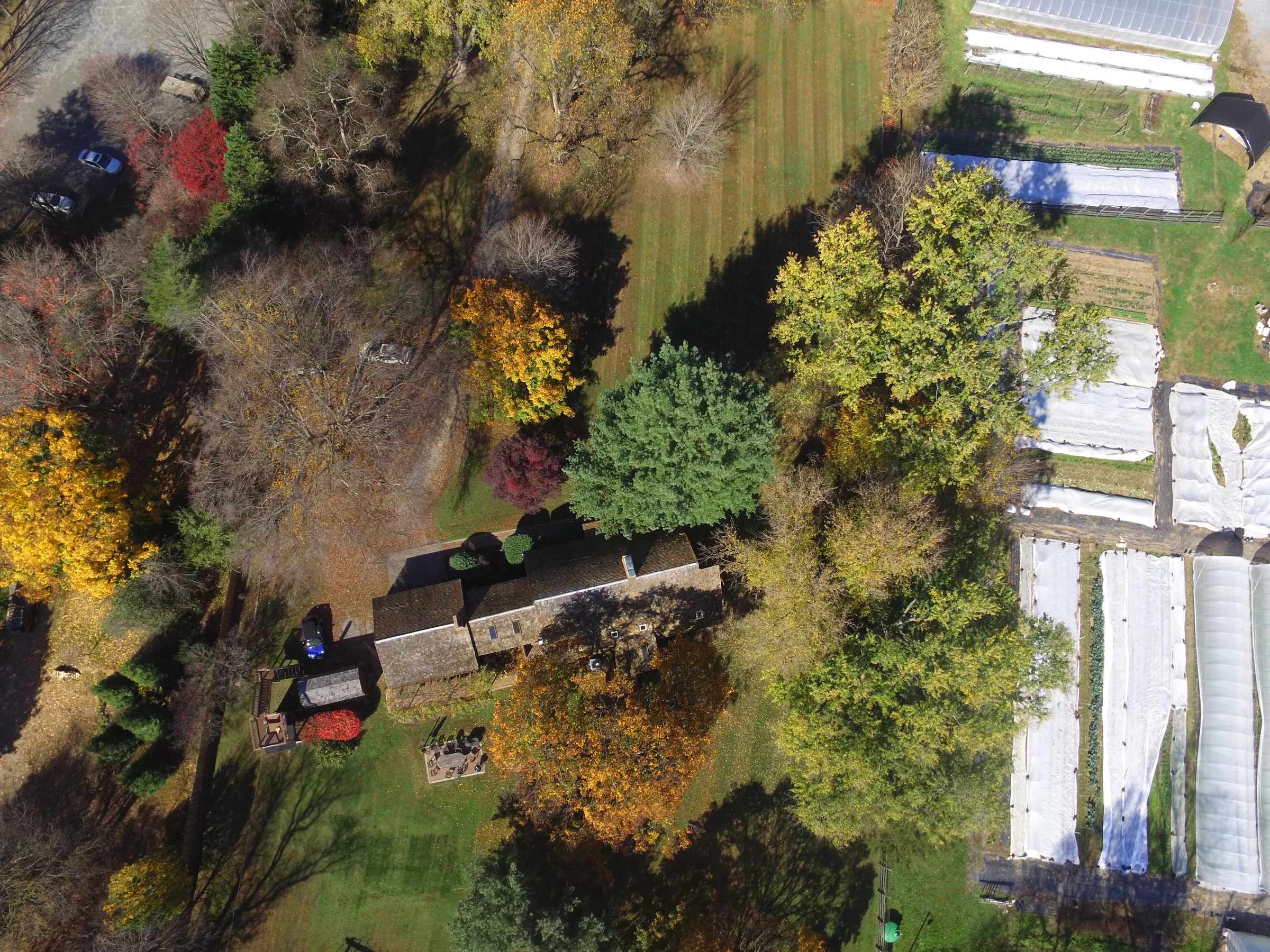
Four things we understand about Great Falls.
Hot summers, real winters.
Great Falls sits in a transition zone. Plants that thrive in Maryland may struggle here. Plants that work in Charlottesville may not survive. We design with palettes proven across multiple Great Falls sites through full seasonal cycles.
Plants that belonged here first.
Eastern redbud, flowering dogwood, American beech, native viburnums, oakleaf hydrangea, wild ginger, native ferns. The plants that built the Piedmont before development. Designed back into estate gardens, they belong instantly.
Composed, not just dense.
Most Great Falls estates need screening, from the road, from neighbors, from the angle that nobody planned for when the house went in. We design screening as composition, not as a wall of leyland cypresses.
Working with the topography.
Great Falls topography invites water features. Existing ponds renovated. New ones sited where the topography wants them. Stream restoration where the property's hydrology has been disrupted by upstream development.
Three reasons it fits.
We are 15 minutes from you.
Site visits during install are not a logistics exercise. We can stop in to inspect a phase, walk a question through with the crew, or check the angle a fence is being set. Distance does not work against the project.
Local projects you can visit.
We can point to completed estates within driving distance from your property. You can stand in a finished Great Falls garden we designed before committing to your own. Few designers in the region can offer that.
We know where the bees go.
Where the deer pressure is heaviest. Which side of the road floods. Which slopes hold morning fog. The knowledge that comes from working a region for years rather than reading about it in a regional plant guide.
Work in Great Falls.
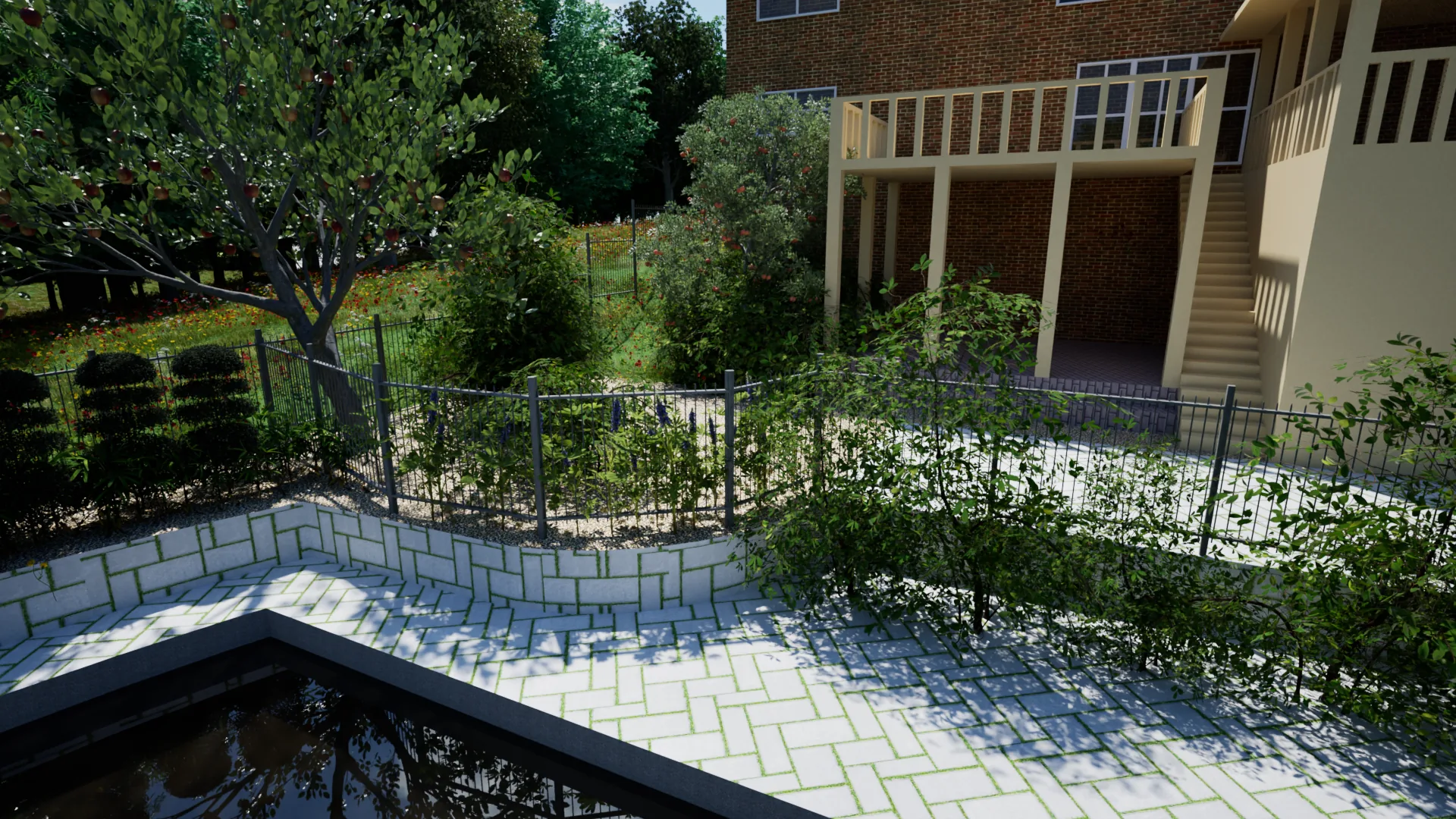
The Farmette
An apple block grown into a 40-tree food forest, with a duck pond, rainwater capture and a farm stand for the kids.
The Tropical Garden
Banana plants thriving in Zone 7, raised beds and a stone cairn fountain in a 25.5-foot walled garden.
What the land here asks for.
Great Falls land is rocky, sloped and mostly unsewered, and each of those facts shapes a plan before any plant is chosen.
Near the river the ground is thin soil over the same hard metamorphic rock you can see at Great Falls Park. Farther in, lots flatten out onto heavier clay. Nearly every home runs on a private well and a septic system, so the drainfield and its reserve area are the first things we locate on a survey, because nothing with deep roots belongs over them. Difficult Run and its tributaries cut through the area, and the protected buffers along them decide where earthwork and clearing can happen at all.
- Hardiness zone
- USDA 7a to 7b, colder in the hollows
- Rainfall
- A little over 40 inches a year, spread through every month
- Soil
- Thin and rocky near the river, clay subsoil on flatter lots
- Utilities
- Private wells and septic on most properties
- Typical lot
- Two to ten acres, often with mature canopy
- Deer pressure
- Heavy. We assume fencing or resistant palettes
What to know before you dig.
Up to 75 percent back through VCAP.
Fairfax County homeowners can be reimbursed up to 75 percent of eligible costs for conservation landscaping, rain gardens, dry wells and cisterns through the Northern Virginia Soil and Water Conservation District, with conservation landscaping or a rain garden capped at up to $7,000. The district must approve the design before work starts. Program page.
The 2,500 square foot line.
All of Fairfax County sits inside Chesapeake Bay Preservation Areas, so disturbing 2,500 square feet or more generally needs an approved plan. A pond, a swale system or a new orchard terrace can pass that quickly. Stream buffers, the Resource Protection Areas, carry tighter limits still. County ordinance.
Land use assessment on five acres or more.
Virginia lets participating localities tax land in genuine agricultural or horticultural use at its use value, from a five acre minimum. On a Great Falls parcel priced for development the saving can be substantial, and it rewards an orchard or nursery block that is real and maintained. Code of Virginia.
Asked locally.
Can I plant trees near my septic field?
Not over it, and not close to it. Tree and shrub roots seek out the moisture in drain lines. We locate the drainfield and its reserve area from the county health department records and your survey, keep deep rooted plants well clear, and use shallow rooted native grasses and perennials over the field itself.
Do I need a permit to build a pond or regrade part of my property?
Often, yes. In Fairfax County the threshold for an erosion and sediment control plan is 2,500 square feet of disturbance, and any work in a Resource Protection Area along a stream needs county approval. We flag both during design so the permit is on the schedule from the start.
Does VCAP apply to a large estate?
Yes. VCAP is open to residential properties of any size in the district. On larger properties we often combine several eligible practices, each with its own cap, so the reimbursement reflects the whole water plan rather than a single rain garden.
When is the best time to plant in Great Falls?
Fall. Soil stays warm into November, roots establish over winter, and plants go into their first summer with a head start. Early spring is the second window. Midsummer planting is possible with irrigation but costs more in losses and watering.
Further reading: How to qualify for conservation cost-share and tax credits in Virginia →
Sources
- Fairfax County: Virginia Conservation Assistance Program
- Fairfax County: Chesapeake Bay Preservation Ordinance
- Virginia Administrative Code 9VAC25-875-240: land disturbance thresholds
- Code of Virginia 58.1-3233: land use assessment
Program rules and figures change. Check the current numbers with the office named before you plan around them.
A landscape designed for
Great Falls.
Begin with a 15-minute discovery call. We will discuss your property, your goals, and how Great Falls land specifically wants to be designed.
Book your discovery call