Eden and Dane Nursery

Grown here.
Planted there.

Locally propagated food-bearing and native plants, available in cuttings, quarts, and field-grown sizes. Everything we grow, we also design with and install. These are not catalog plants - they are the same stock that goes into our client properties.

Locally grown Food bearing Native species Grafted pawpaws Great Falls, VA Ships fall and spring

Shipments go out twice a year - once in late fall, once the plants are dormant, and once in early spring, right before they wake up. Order anytime; we will confirm your shipping window when we process it.

Live arrival guarantee: if a plant arrives damaged or does not survive shipping, contact us within 5 days of delivery with a photo and we will replace it or refund it, no questions asked.

Shipping restrictions: due to state agricultural regulations on nursery stock, we currently do not ship live plants to California, Arizona, Hawaii, or Florida. All other states, no problem. Questions about your state specifically? Ask us before ordering.

Why it matters where your plants come from

Plants that know this climate.

Most nursery stock is grown in Oregon, Florida, or the Pacific Northwest and shipped to mid-Atlantic retailers. By the time it reaches a garden center, it has been stressed, acclimated, and sold through a supply chain optimized for shelf life, not establishment success.

Every plant we sell was propagated and grown in Great Falls, Virginia - the same hardiness zone, the same humid subtropical summers, the same clay-heavy soils your property likely has. Establishment is faster, transplant shock is lower, and the genetics are already adapted to what your land will throw at them.

Zone 7b
All stock grown and hardened here, in the same conditions your property has.
Named varieties
Grafted pawpaws and selected cultivars - not seedlings, not wild-type unknowns.
  • Propagated from proven, high-performing parent stock - not wholesale seedling trays
  • Available in cuttings for early adopters, quart and gallon pots for immediate impact, and field-grown sizes for instant structure
  • All food-bearing species chosen for flavor, yield, and regional adaptability - not just catalog availability
  • Native selections support local pollinators and qualify for conservation landscaping cost-share programs
  • Small batch - inventory is limited and restocked seasonally. Contact to confirm current availability.
Zone
Type
Grows for
Trees

Canopy and mid-story.

Field-grown and container trees in multiple sizes. Most are available as bare-root in late winter or container-grown spring through fall. Larger field-dug sizes available by arrangement for instant structure.
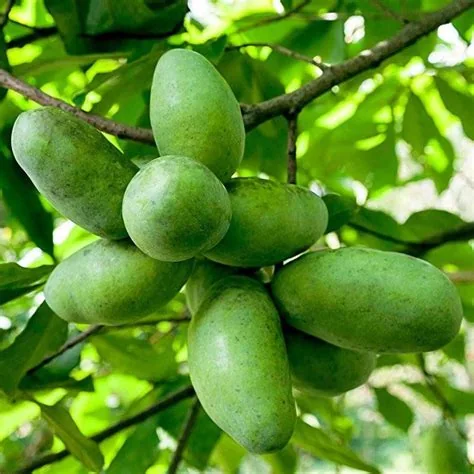
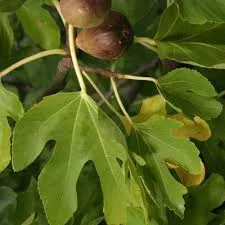
Pawpaw fruit on tree
Pawpaw Tree
Asimina triloba
The largest native fruit in North America. Custardy tropical flavor, closest to mango meets banana. Seed-grown native Potomac stock, grown on to landscape size. Plant two genetically distinct trees for cross-pollination.
Sole larval host for the zebra swallowtail butterfly. No pawpaw on the property means no zebra swallowtails.
Native Food bearing Pollinator Tree
Available as: seed-grown, grown on to landscape size; field-dug by arrangement
Fig
Fig Tree
Ficus carica
Cold-hardy varieties selected for Zone 7b survival and strong production. Brown Turkey and Chicago Hardy are the workhorses - reliable, sweet, and capable of two crops per season in a sheltered microclimate.
Ripe fruit draws beneficial insects and birds in late summer, when other food sources are thinning out.
Food bearing Tree
Available as: rooted cutting, 1-gal, 3-gal, field-grown
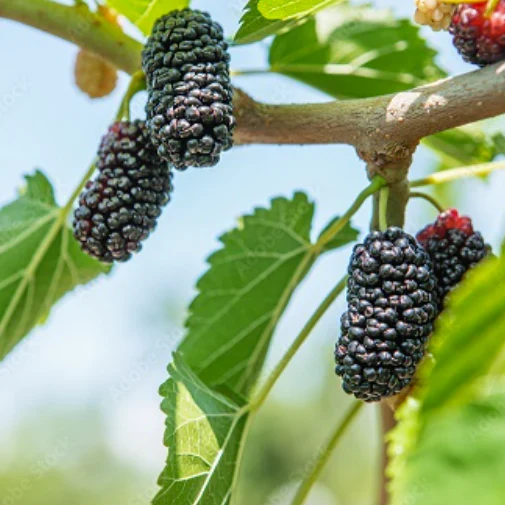
Mulberry Tree
Native Red Mulberry
Morus rubra
The mulberry native to Virginia, grown at our nursery in Great Falls. Sweet dark berries in early summer, no spray program, and one of the best trees you can plant for songbirds.
One of the most effective bird-distraction plants available. Birds take mulberry first and leave your other fruit alone.
Food bearing Pollinator Tree
Available as: rooted cutting, 1-gal
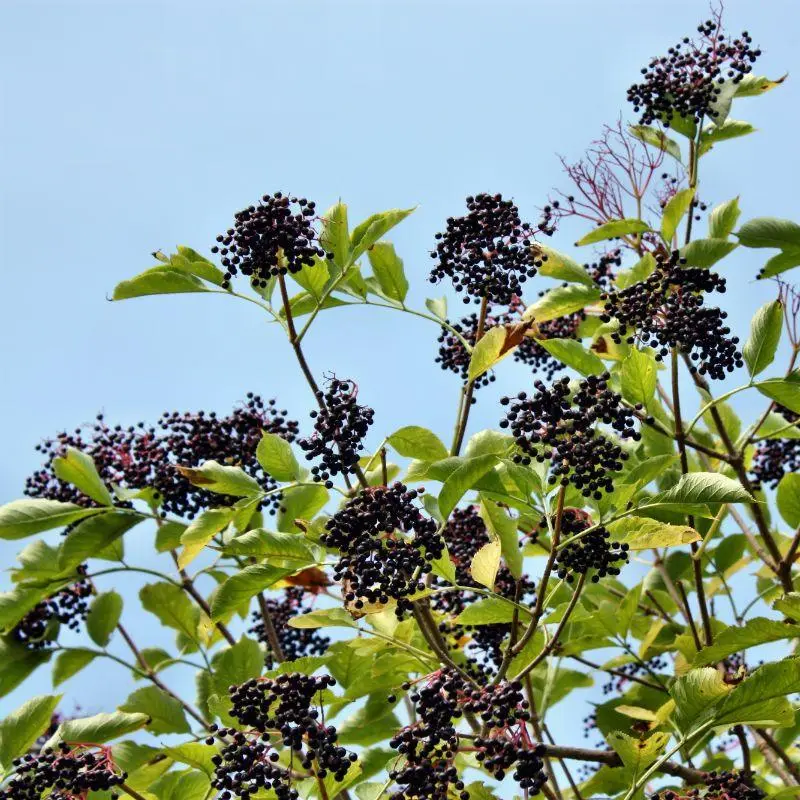
Elderberry
Elderberry Bush
Sambucus canadensis
Native to Virginia and one of the most valuable dual-purpose plants you can establish. Flowers for cordials in June, fruit for syrup and wine in August. Grows fast, fixes itself into any difficult corner, and supports dozens of native insect species.
Supports dozens of native insect species and is one of the highest-value bird food sources in the region.
Native Food bearing Pollinator Large shrub/tree
Available as: rooted cutting, 1-gal, 3-gal
Native pawpaws

One of the few regional
native pawpaw sources.

Our pawpaws are seed-grown at our nursery in Great Falls from local Potomac stock, which keeps the genetic diversity that makes a native planting resilient. Most nurseries that carry pawpaw sell small whips. We grow ours on until they are large enough to hold their own in a real landscape. Grafting to a named variety is available on request.

Pawpaws require two genetically distinct trees for cross-pollination. Two seedlings from different parents do the job. We sell in pairs and can advise on spacing and microclimate siting to get you to fruit as quickly as possible.

  • Native seedlingsAsimina triloba, seed-grown from local Potomac stock. Each tree genetically distinct.
  • Landscape sizeGrown on well past the whip stage, so the tree can establish in a real planting.
  • Grafted on requestAsk if you want a named variety grafted onto one of our seedlings.
  • Current stockStock varies by season. Contact to confirm what is currently available and in what size.

What to know before you buy

Pawpaws need full sun to produce well - dappled shade works for establishment but limits fruit set. They prefer moist, well-drained soil and are not drought-tolerant in the first two years.

Seedling pawpaws take longer to fruit than grafted trees, often six years or more, and each one's fruit is a little different, the way a wild pawpaw patch is. If faster, predictable fruit matters most, ask about grafting.

We recommend planting pairs 15-20 feet apart. We can supply pairs and advise on siting during a consultation or nursery visit.

Field-dug pawpaws are available in limited quantity in late winter before bud break. These are larger specimens - 5-8 feet - for clients who want immediate presence. Contact us directly to reserve.

Inquire about pawpaws →
Apple Tree
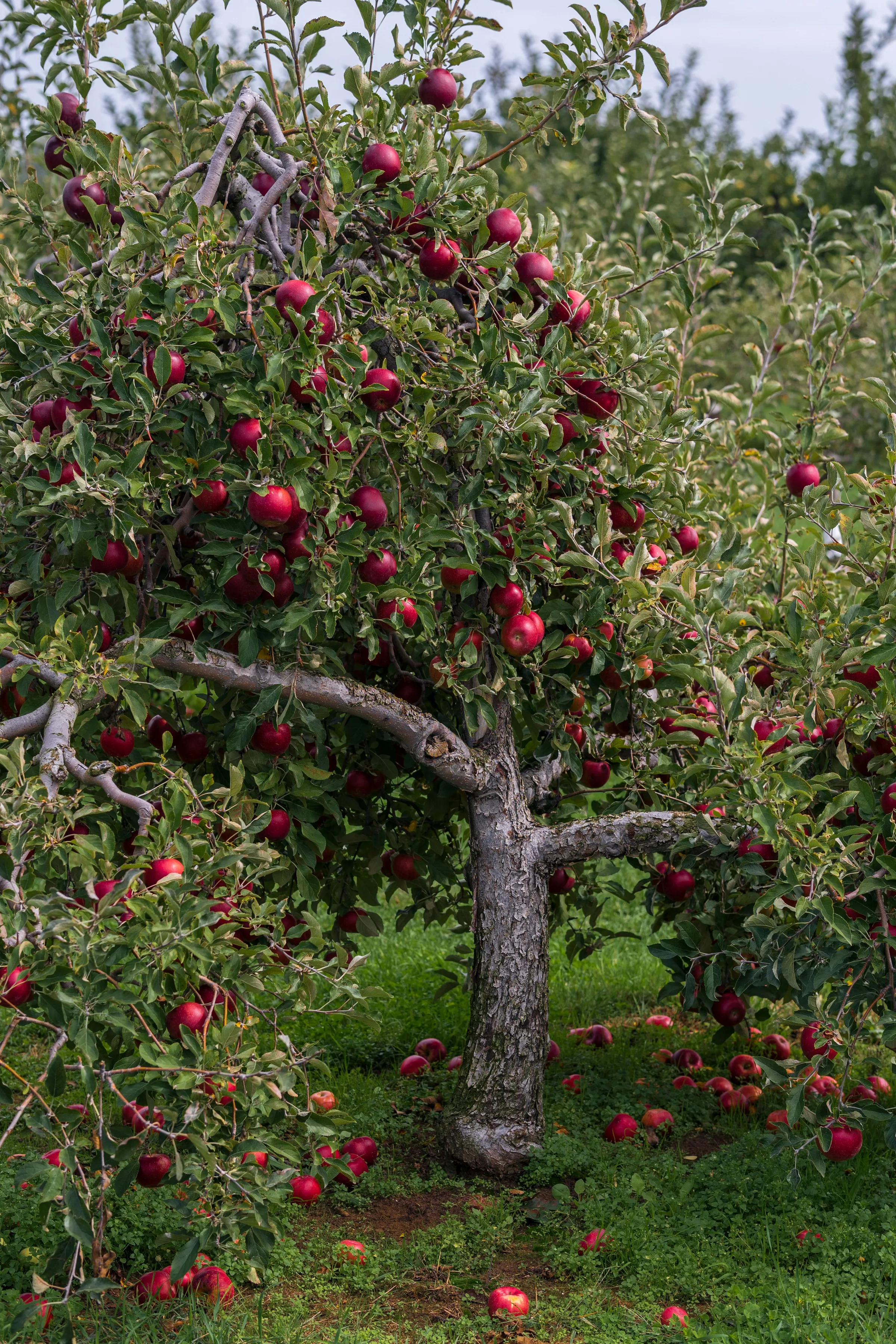
Apple Tree
Malus domestica, seed grown
Grown from seed in our air-prune beds, so each tree has a dense, fibrous root system and grows into a full-size, long-lived apple. Every seedling is unique. Plant two for pollination.
Spring bloom is a major early nectar source, and fallen fruit feeds deer, birds, and insects through autumn.
Food bearing Tree
Available as: 1-gal, 3-gal, bare-root in season
Peach
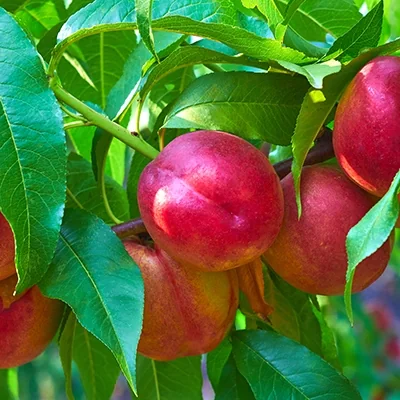
Peach Tree
Prunus persica
Fast-fruiting stone fruit selected for regional disease resistance - among the quickest fruit trees to reward a new planting, often bearing within two to three years.
Early bloom provides nectar before most natives open, and fruit drop supports birds and beneficial insects late in the season.
Food bearing Tree
Available as: 1-gal, 3-gal, bare-root in season
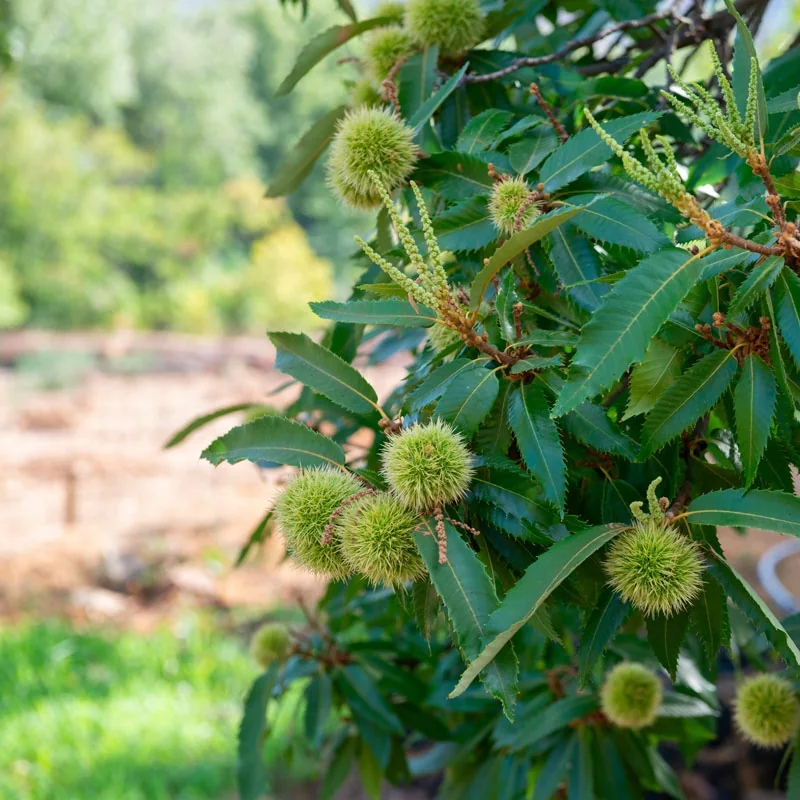
Chestnut
Chestnut Tree
Castanea spp.
Blight-resistant hybrid chestnuts bred to survive where the American chestnut once dominated Eastern forests. A legacy nut crop for a property with room to grow.
The nut crop feeds turkey, deer, and squirrel, restoring a food source Eastern forests largely lost with the American chestnut.
Food bearing Tree
Available as: 1-gal, 3-gal
Pecan
Pecan Tree
Carya illinoinensis
A large, long-lived native nut tree - a genuine legacy planting that begins bearing after roughly a decade and can remain productive for well over a century.
A long-lived canopy tree that supports native insects and provides substantial wildlife mast once mature.
Native Food bearing Tree
Available as: 1-gal, 3-gal, field-grown by arrangement
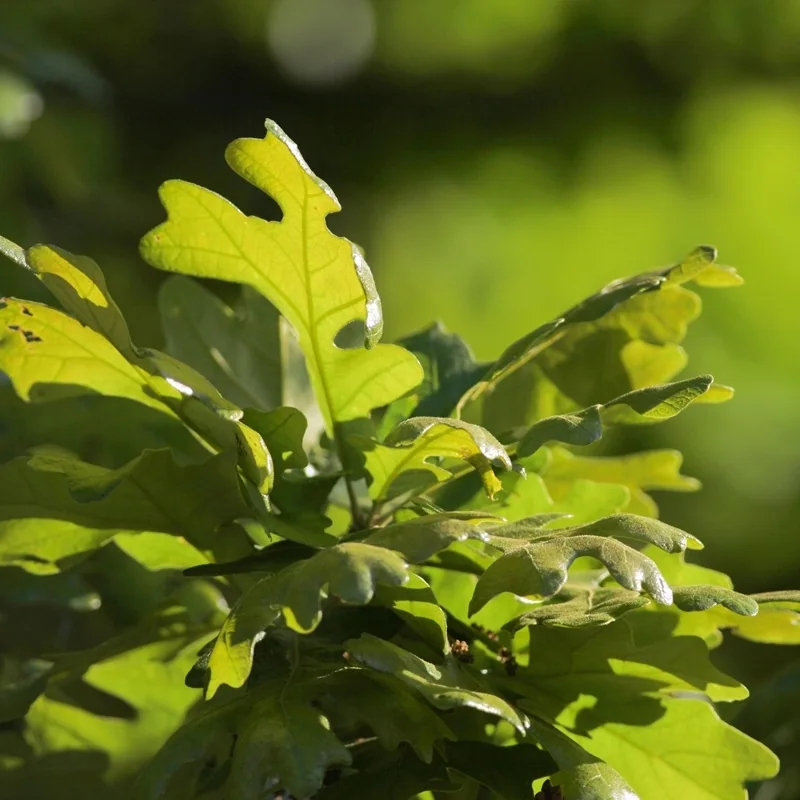
Oak
Oak Tree
Quercus spp., Native
Native oak species selected for regional adaptability - the single most valuable tree genus for wildlife support in the Eastern United States.
Supports more caterpillar species than any other tree genus in North America, and caterpillars are what nesting songbirds feed their young.
Native Pollinator Tree
Available as: 1-gal, 3-gal, field-grown by arrangement
Shrubs and Berry Plants

The mid-layer that feeds you first.

Berry shrubs produce within 1-3 years and earn their space in any productive landscape. These are the plants that give you something to harvest while your trees are still getting established.
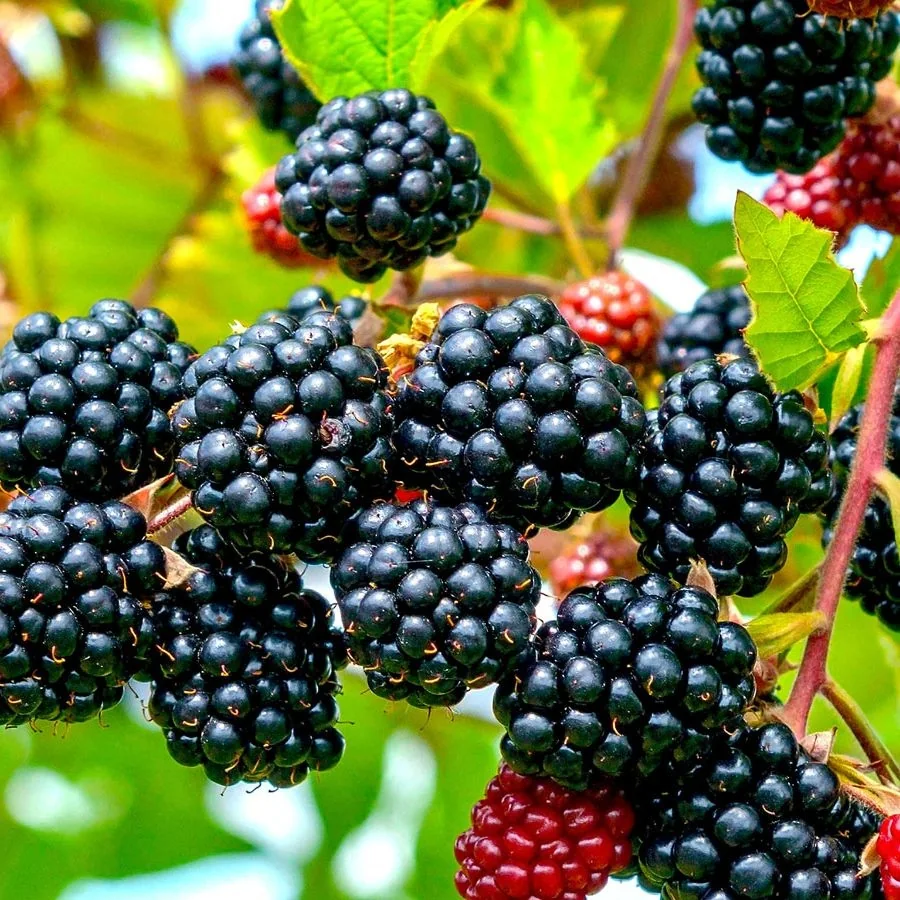
Blackberry
Blackberry Bush
Rubus allegheniensis
Native and thornless varieties available. Produces heavily in year two, prolifically from year three. Excellent for hedgerows, property edges, and bank stabilization. Jam, cobbler, wine, and fresh eating.
Host plant for several native butterfly and moth species. Dense canes give nesting cover, and the fruit feeds birds well past your own harvest.
Native Food bearing Shrub
Available as: rooted cutting, 1-gal, 3-gal
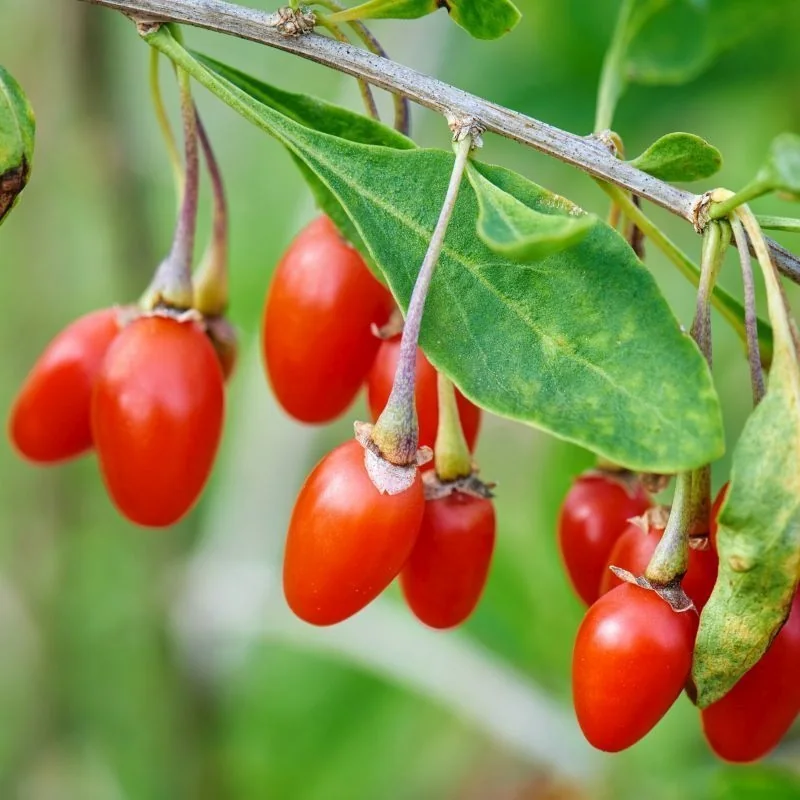
Goji Berry
Goji Berry Bush
Lycium barbarum
Drought-tolerant once established, long-lived, and extremely productive. Produces for decades with minimal input. Berries dry well and store easily. The canes will spill beautifully over a fence or wall.
A long bloom window feeds bees from early summer into fall, and the plant holds soil on slopes where little else establishes.
Food bearing Pollinator Shrub
Available as: rooted cutting, 1-gal
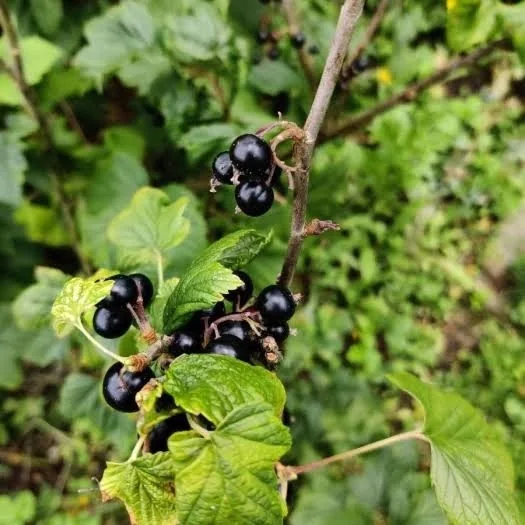
Currant
Currant Bush
Ribes rubrum / nigrum
Black and red varieties available. One of the most productive fruiting shrubs per square foot in a temperate garden. Excellent for jam, cordials, and fruit wines. Partial shade tolerant - useful in spots other fruiting plants won't thrive.
Early flowers arrive when few other food sources are open, making it a valuable bridge for emerging native bees.
Food bearing Pollinator Shrub Cutting
Available as: hardwood cutting, rooted cutting, 1-gal
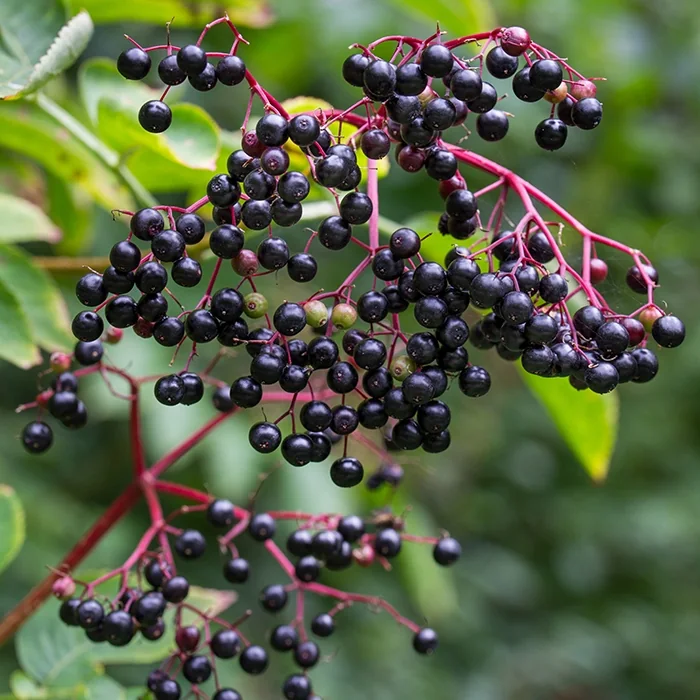
Elderberry
Elderberry Bush
Sambucus canadensis
Native, fast-growing, and one of the highest-value dual-use plants available in our region. See Trees section for the full description. Also listed here as it is often used as a large managed shrub in mixed borders.
Native Food bearing Pollinator Shrub
Available as: rooted cutting, 1-gal, 3-gal
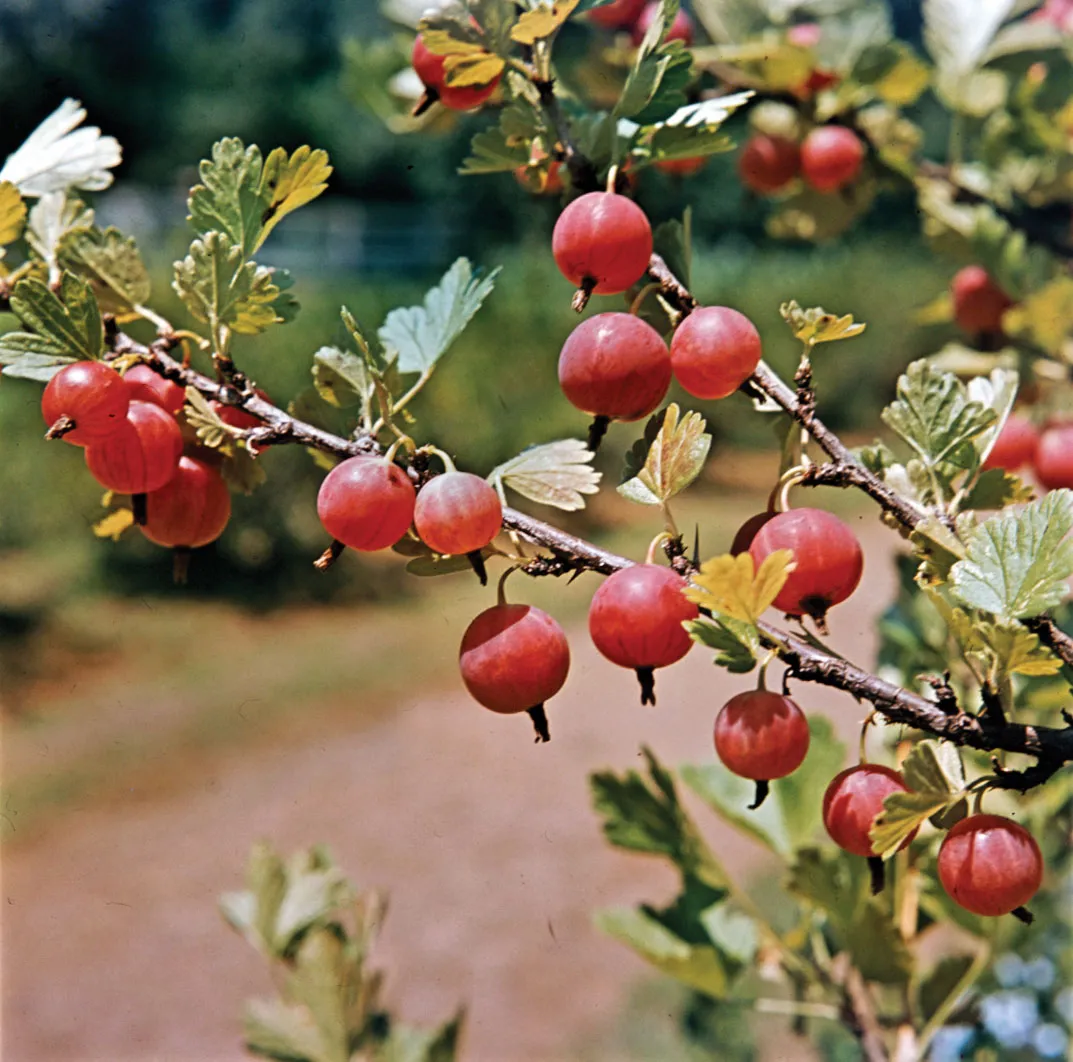
Gooseberry
Gooseberry Bush
Ribes uva-crispa
A compact, self-fertile fruiting shrub closely related to currant, producing tart-to-sweet berries that shine in pies, preserves, and fresh eating alike.
Shade tolerance lets it feed pollinators in understory positions most fruiting plants cannot occupy.
Food bearing Shrub
Available as: rooted cutting, 1-gal
Blueberry Bush
Blueberry Bush
Vaccinium corymbosum
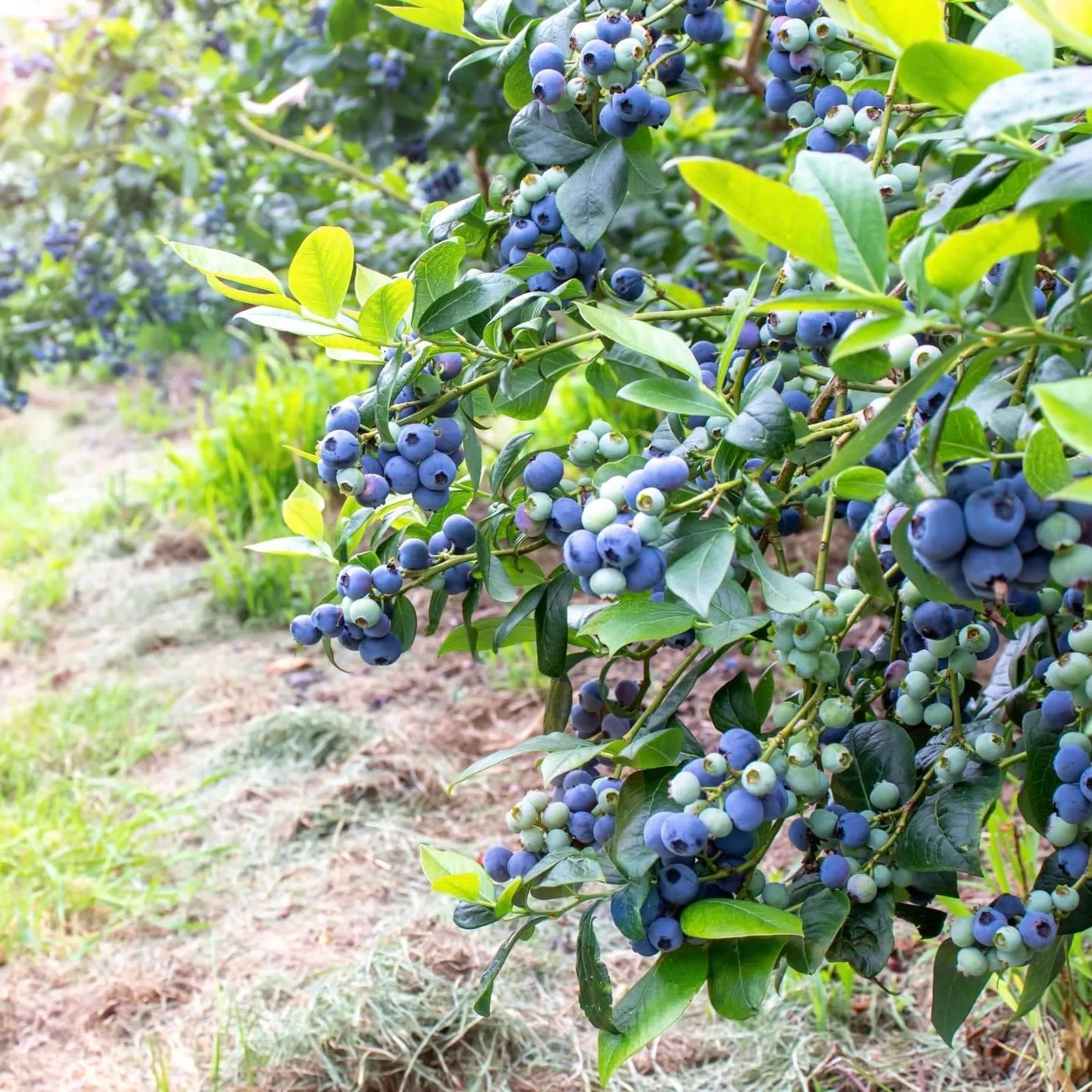
Highbush blueberry selected for regional performance. Requires acidic soil (pH 4.5-5.5) and a second variety for best pollination - reliable, heavy midsummer harvests once established.
Native bumblebees pollinate blueberry far more effectively than honeybees, so the plant supports the insects that make it productive.
Food bearing Shrub
Available as: 1-gal, 3-gal
Perennials

The ground layer. Plant once, harvest always.

These are the plants that stitch a productive landscape together - filling the understory of orchards, anchoring pollinator pathways, and producing food, medicine, and biomass year after year with no replanting.
Echinacea
Echinacea purpurea
Native prairie perennial that thrives in Virginia summers with zero supplemental water once established. A cornerstone pollinator plant - essential for native bees, monarch butterflies, and goldfinches who harvest the seed heads in fall. Medicinal root after year three.
Essential for native bees and monarchs, and goldfinches harvest the seed heads through fall if you leave them standing.
Native Pollinator Medicinal Perennial
Available as: plug, 4-inch, 1-gal
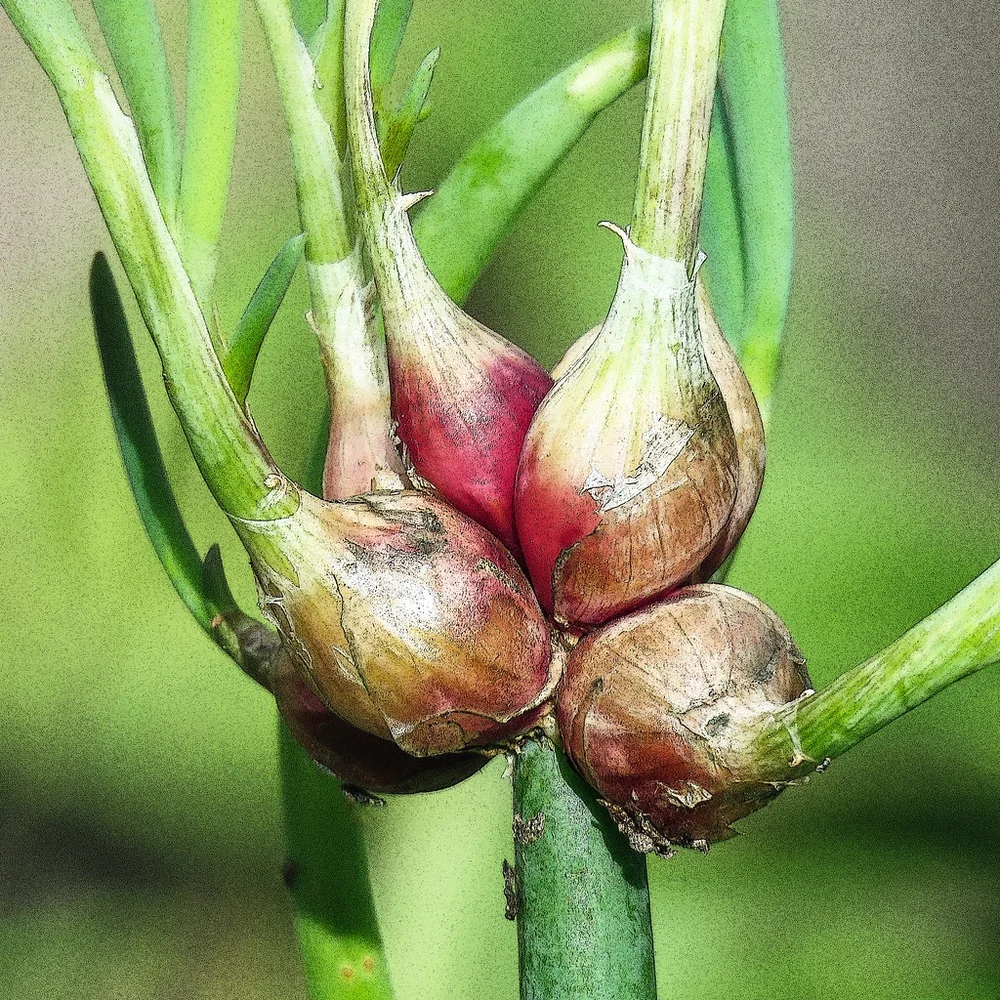
Egyptian Walking Onion
Allium x proliferum
The most self-sufficient allium in the garden. It plants itself - topset bulbils form at the tips and bend to the ground, walking outward by a foot or two each year. Harvest the greens as scallions all season, the bulbils as shallot-like onions in fall.
Flower heads draw beneficial insects, and the perennial habit means undisturbed soil biology year after year.
Food bearing Perennial
Available as: bulbil sets, established clump
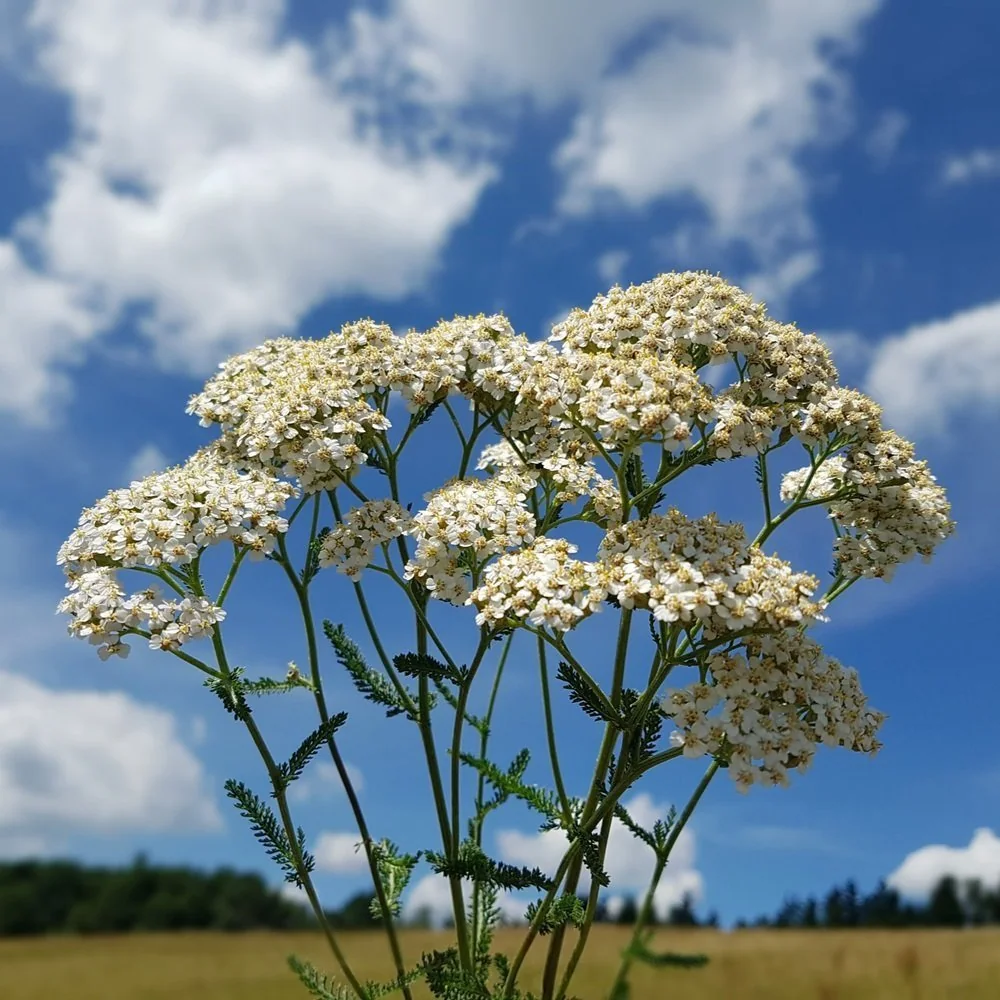
Yarrow
Yarrow
Achillea millefolium
Native yarrow is one of the most important plants in a permaculture design - it attracts beneficial predatory insects (including parasitic wasps that target aphids and caterpillars), draws up nutrients from deep soil, and tolerates drought and mowing. Dynamic accumulator, medicinal, and beautiful in a meadow or orchard understory.
Attracts parasitic wasps and other predatory insects that control pests, which makes it one of the most useful plants in a productive garden.
Native Pollinator Medicinal Perennial
Available as: plug, 4-inch, 1-gal, division
Black-Eyed Susan
Black-Eyed Susan
Rudbeckia hirta
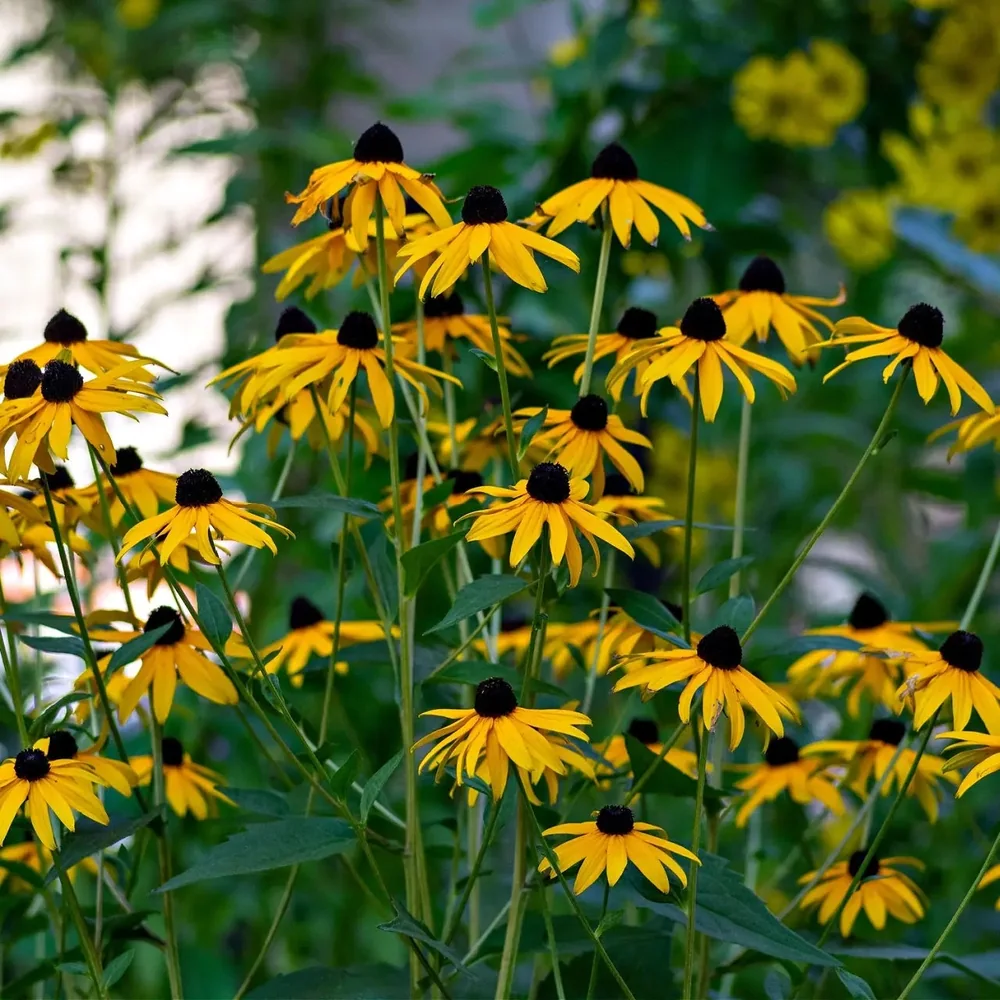
A native meadow perennial that self-seeds readily and blooms through the heat of summer into fall. Reliable pollinator and beneficial insect magnet, drought tolerant once established, and a strong companion planting choice for orchard understories and cut-flower rows alike.
Native Pollinator Perennial
Available as: plug, 4-inch, 1-gal
Siberian Iris
Siberian Iris
Iris sibirica
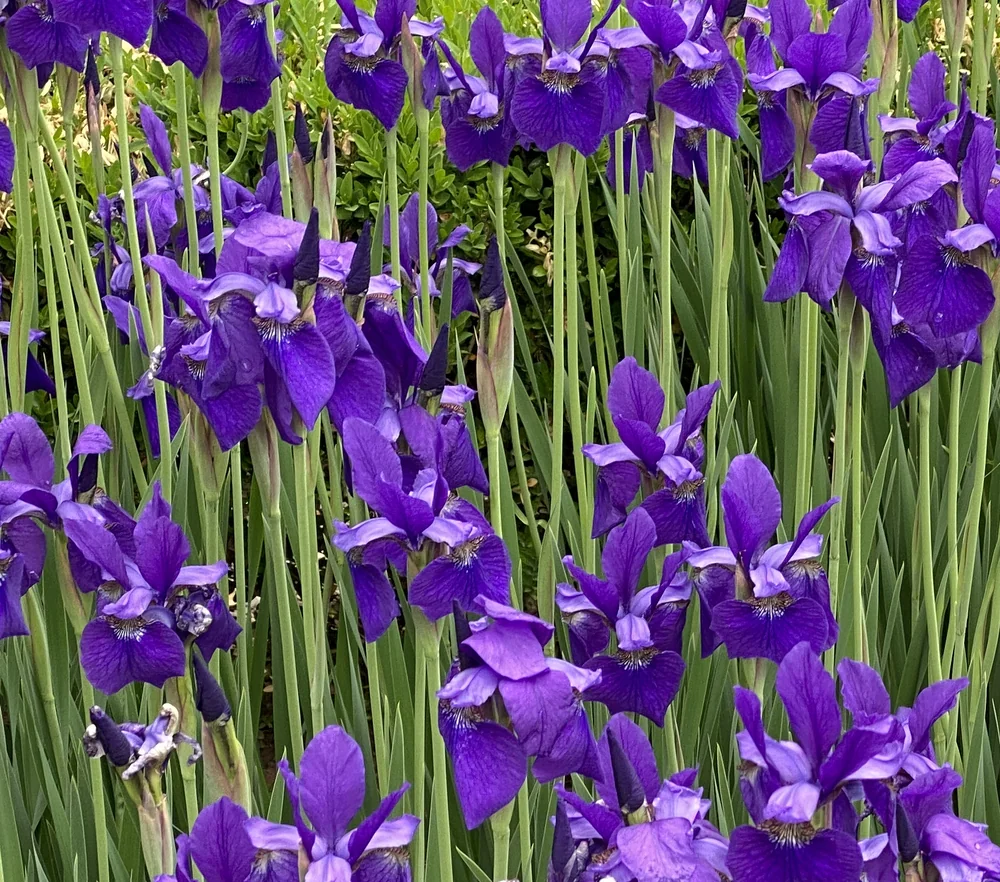
One of the most reliable perennials for the Mid-Atlantic. Long-lived, multiplies slowly into impressive clumps, and blooms reliably in May without any attention. Excellent at pond edges and in rain gardens where it handles wet feet. Native bumblebees depend on it.
A dense root mass stabilizes pond edges and wet ground, and early bloom supports emerging pollinators.
Pollinator Perennial
Available as: 1-gal, division
Cuttings and Propagation Material

For the patient grower.

Hardwood and softwood cuttings available seasonally for experienced growers who want to propagate their own stock. Lower cost, higher involvement. Contact us in late winter for hardwood cutting availability.

Fig Cuttings
Fig Cuttings
Ficus carica
Hardwood cuttings taken in late winter from our established cold-hardy Zone 7b stock. Figs root easily with minimal equipment - a damp medium and a warm spot is enough. Ask us about rooting technique if you're new to propagation.
Food bearing Cutting
Available as: hardwood cutting bundle (late winter), rooted cutting (spring)
Currant Cuttings
Currant Cuttings
Ribes spp.
One of the easiest cuttings to root. Hardwood cuttings from black and red varieties taken in late winter. Push them into moist soil in early spring and most will root with no intervention. A single cutting becomes a productive shrub in two seasons.
Food bearing Cutting
Available as: hardwood cutting bundle (late winter)
Elderberry Cuttings
Elderberry Cuttings
Sambucus canadensis
Softwood cuttings taken in early summer or hardwood cuttings in late winter. Elderberry is enthusiastic about rooting and forgiving with technique. A cutting taken in March can be a planted shrub by fall.
Native Food bearing Cutting
Available as: hardwood cutting, softwood cutting (seasonal)
Get in touch

Stock is limited and seasonal.

We grow in small batches and sell out of most things by mid-spring. If you have something specific in mind - a quantity, a size, a variety - reach out early and we will tell you what is available and when.

Contact the nursery →

We respond to all nursery inquiries within two business days. Pickup by appointment at our Great Falls, VA location.

Why our orchards

Three reasons they endure.

i  Variety

Beyond what you can buy.

We plant trees you cannot find at a garden center, grown in our own nursery in Great Falls: seed-grown apples, native pawpaws and mulberries, and uncommon nuts. The orchard becomes a small, quiet preservation project as well as a yield project.

ii  Integration

Composed with the property.

Orchards integrated into garden walks, beside ponds, along stone walls. Not relegated to a back corner. The orchard becomes part of the daily landscape rather than a separate utility zone.

iii  Stewardship plan

Designed to outlive install.

Every orchard ships with a multi-year care guide covering pruning windows, grafting opportunities, replacement protocol, and yield expectations. The owner is set up to steward the orchard properly, not guess at it.

Plant the orchard
your grandchildren eat from.

Begin with a 15-minute discovery call. We will talk about your land, the trees you have always loved, and what could mature on your property over the next quarter century.

Book your discovery call