 Eden & Dane
Currant
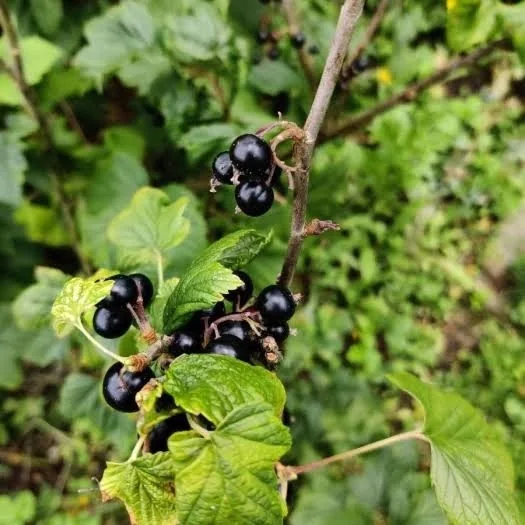
A compact, self-fertile shrub producing loose clusters of translucent, tart berries, available in red, white, or black varieties.
Currants are one of the most reliably productive shrubs for a partially shaded spot, an area many fruiting plants struggle in. They appreciate afternoon shade in hot climates and consistent moisture, and will fruit well even in the dappled light under larger trees. The clusters of berries hang like small strings of jewels and ripen over a short, concentrated window in early to midsummer.
All three color varieties, red, white, and black, are self-fertile and do not require a second plant, though planting more than one extends the harvest window slightly. Currants are naturally compact, rarely exceeding 5 feet, which makes them a good fit for smaller properties or as a productive foundation planting along a shaded wall.
Before you plant.
Planting & Growing Information
Good company
for your currant.
Fruit for the
shady side of the yard.
Currants are the answer for the part of the property that gets morning sun and afternoon shade. Where most fruit plants sulk, currants fruit well and actually prefer the relief from summer heat.
Red and white currants are the same species, Ribes rubrum, prized for bright, tart clusters that make jewel-clear jellies. Black currant, Ribes nigrum, is its own species with a deep, musky flavor and exceptional vitamin C.
All of them are compact, self-fertile and among the earliest fruit of the summer.
- Red currantClassic tart clusters for jelly, syrups and sauces.
- White currantA milder, sweeter selection of red currant, best eaten fresh.
- Black currantStrong, aromatic fruit for cordials, jam and baking.
- Current stockInventory varies by season and batch. Contact us to confirm what is available now, and in what size.
What to know before you buy
Some states restrict currants, especially black currant, because Ribes can host white pine blister rust. We check your state before shipping.
Give currants consistent moisture and a thick mulch. They root shallowly and dislike drying out.
Each winter, remove canes older than about three years at the base. Currants fruit best on two- and three-year-old wood.
Space plants 4 to 5 feet apart. They reach full production in about three years.
What we ship.
Plants ship in the dormant seasons, late fall and early spring, with local pickup in Great Falls. Availability changes by batch, so ask if you need a particular size.
Planting at scale.
We supply landscapers, nurseries, farms and larger residential projects with currant in quantity. Stock is seasonal and limited, so get in touch ahead of your planting window and we will plan around your order.
Ask about wholesale →Planning an orchard, guild or garden around this plant? An on-site consult in the DC area starts at $250, a written Remote Strategy at $1,500, or start small with a free guide.