 Eden & Dane
North America's largest
native fruit.
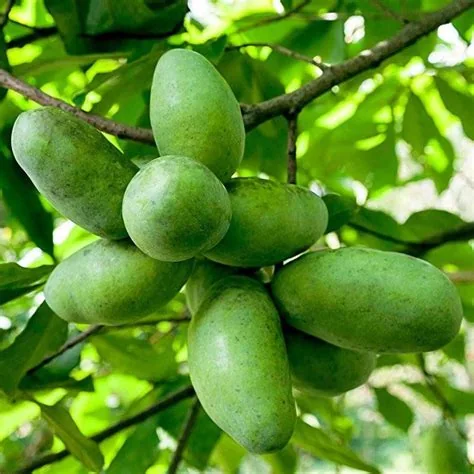
Seed-grown native Potomac Pawpaw, raised from local stock in Great Falls, Virginia. One of the only local sources for pawpaws grown to real landscape size rather than sold as whips.
Trees ship in quart and gallon pots spring and fall. Larger field-dug specimens are available in limited quantity in late winter, before bud break. Contact us to reserve.
Native stock, grown to real size.
Our pawpaws are seed-grown from local Potomac stock, which keeps the genetic diversity that makes a native planting resilient. Every tree is a little different, the way a wild pawpaw patch is, and that variation is what supports the pollinators and wildlife that depend on this species.
Most nurseries that carry pawpaw at all sell small whips. We grow ours on until they are large enough to hold their own in a real landscape, which is the part that actually determines whether a pawpaw establishes. Grafting to a named variety is available on request.
- Seed-grown from local Potomac stock, keeping the genetic diversity a native planting depends on
- Grown on to landscape size rather than sold as whips. Grafting to a named variety available on request.
- Deer-resistant, which is rare among fruiting trees and valuable on wooded or edge-of-forest sites
- Larval host for the zebra swallowtail butterfly - the tree supports the insect that depends on it entirely
- Small batch - inventory is limited and restocked seasonally. Contact to confirm current availability.
Planting & Growing Information
Plants you might also like.
Here's what works well nearby.
One of the few regional
native pawpaw sources.
Pawpaw is hard to find locally at any real size. Most sources offer small whips that take years to become anything, if they establish at all. We grow native seed-grown stock on until it is substantial enough to plant out and actually succeed.
Pawpaws require two genetically distinct trees for cross-pollination. We sell in pairs and can advise on spacing, siting, and microclimate to get you to fruit as quickly as possible.
Grafting to a named cultivar is available on request. Which cultivars we can offer varies, since propagation rights differ by variety, so ask and we will tell you what is currently possible.
- Standard stockSeed-grown native Potomac Pawpaw, grown on to landscape size. This is what we carry by default.
- Grafted on requestWe can graft to a named cultivar by arrangement. Availability depends on propagation rights for the variety, so ask before assuming.
- Field-dug specimensLarger trees in limited quantity, late winter before bud break. By arrangement only.
- Current stockInventory varies by season. Contact to confirm what is available now and in what size.
What to know before you buy
Pawpaws need full sun to produce well - dappled shade works for establishment but limits fruit set. They prefer moist, well-drained soil and are not drought-tolerant in the first two years.
Plant two genetically distinct trees for cross-pollination. Pawpaw is also the sole larval host for the zebra swallowtail butterfly, so a pair does considerably more for the property than fruit alone.
We recommend planting pairs 15-20 feet apart. We can supply matched pairs and advise on variety selection for your site during a consultation or nursery visit.
Field-dug pawpaws are available in limited quantity in late winter before bud break. These are larger specimens - 5-8 feet - for clients who want immediate presence. Contact us directly to reserve.
From a first planting to instant structure.
Every size is native seed-grown stock from the same local Potomac source. The difference is how much of a head start you want to buy.
Planting an orchard, not a tree.
We work with other nurseries, landscapers, and larger residential or farm orchard projects on bulk pawpaw orders, including field-dug specimens at larger caliper for immediate presence. Availability is seasonal and limited - reach out ahead of your planting window so we can plan stock around your order.
Ask about wholesale →Before you plant.
Planning an orchard, guild or garden around this plant? An on-site consult in the DC area starts at $250, a written Remote Strategy at $1,500, or start small with a free guide.