 Eden & Dane
Elderberry
A fast-growing native shrub prized for its clusters of white flowers in early summer and dark, medicinal berries by late summer, equally at home as a hedgerow or a managed fruiting shrub.
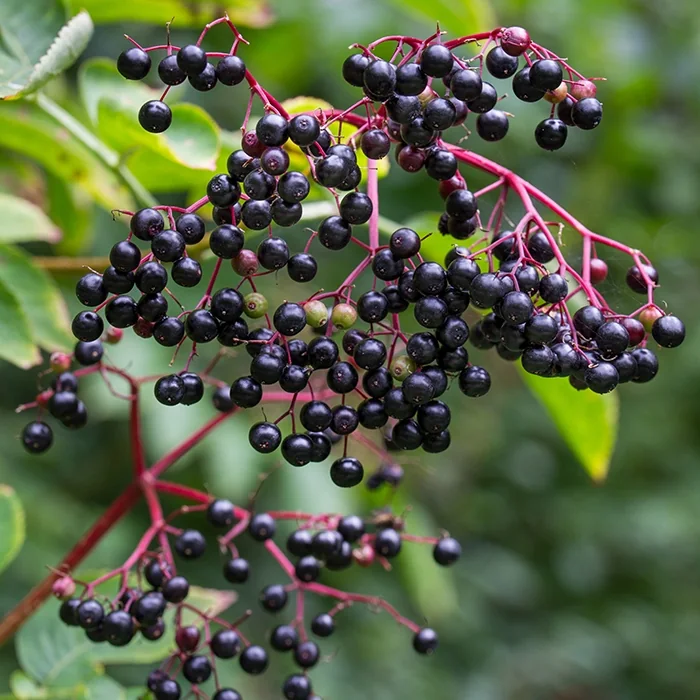
Native elderberry tolerates wet, poorly-drained sites better than almost any other fruiting plant in our catalog, making it a strong choice for low spots, rain gardens, or the damp edges of a property that other species struggle with. It grows quickly, often reaching fruiting size within two to three years, and produces large flat-topped flower clusters (elderflower) followed by heavy clusters of small dark berries.
Elderberry benefits from planting two different varieties for a heavier, more reliable fruit set, though a single plant will still produce. It responds well to hard renewal pruning and can be kept as a compact managed shrub or allowed to grow into a small multi-stem tree. Both flowers and berries have a long history of culinary and medicinal use, but berries should always be cooked before eating.
Before you plant.
Planting & Growing Information
Good company
for your elderberry.
The fruiting shrub
for wet ground.
American elderberry grows wild along Eastern stream banks and wet meadows. Plant it in the low, damp spot where other fruit plants fail, and it thrives.
In early summer it carries broad plates of creamy flowers that bring in pollinators and make elderflower cordial. By late summer the same plants hang with dark berry clusters for syrups, jams and wine.
It grows fast, often fruiting in its second or third year, and makes an excellent informal hedge or wildlife planting.
- Native stockSambucus canadensis, the American elderberry, regionally adapted.
- Two-variety plantingsTwo genetically different plants for a heavier fruit set.
- Rooted cuttingsAn inexpensive way to plant a hedgerow or rain garden edge.
- Current stockInventory varies by season and batch. Contact us to confirm what is available now, and in what size.
What to know before you buy
Always cook elderberries before eating. Raw berries, stems and leaves can cause nausea.
Plant two different plants 6 to 10 feet apart for the best crops.
Elderberry suckers and spreads. Give it room at a property edge, or mow around it to keep it in bounds.
Every few winters, cut the oldest canes to the ground. It regrows quickly and fruits best on younger wood.
What we ship.
Plants ship in the dormant seasons, late fall and early spring, with local pickup in Great Falls. Availability changes by batch, so ask if you need a particular size.
Planting at scale.
We supply landscapers, nurseries, farms and larger residential projects with elderberry in quantity. Stock is seasonal and limited, so get in touch ahead of your planting window and we will plan around your order.
Ask about wholesale →Planning an orchard, guild or garden around this plant? An on-site consult in the DC area starts at $250, a written Remote Strategy at $1,500, or start small with a free guide.